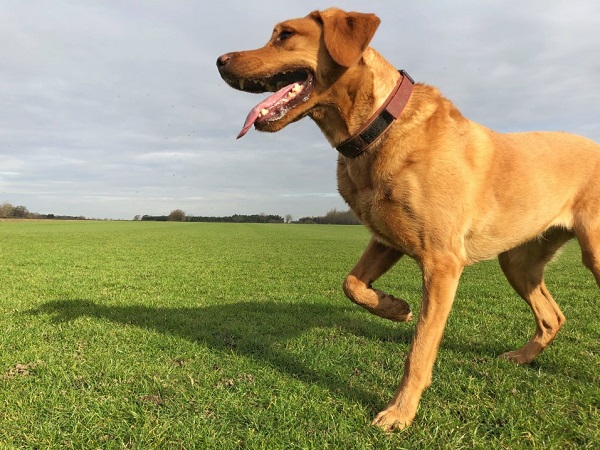
Imagine this: your dog bursts into the house just like he is starring in a pirate movie with one leg dramatically lifted. Is he injured, or is he simply trying to score begging treats? As any pet owner can attest, seeing your limping dog can be distressing.
This guide will help you through the sometimes-confusing world of dog limping with some humor and a lot of wisdom. You will learn about the causes of your dog’s limping, as well as when to reach out for professional help to ensure your puppy is not in pain and find answers for help.
Common Causes of Limping in Dogs
We humans have this habit of lying to gain any sort of benefit, like getting a favor, getting some attention, or anything else. However, dogs don’t limp just to test your acting skills. Here’s what might be going on with your dog.
Minor Injuries (Cuts, Splinters):
At times, when you see your dog limping, the cause might be as simple as small nuisances with a paw. Minor injuries like a thorn in the paw or a small cut from sharp objects often lead to dog limping.
Often, our furry friends get a little too enthusiastic while rushing around at play. You may see them licking their paw repeatedly or may also notice a subtle limp as they do not want to place all their weight on the paw.
Note: The canine version of stepping on a Lego is – it hurts but will survive.
Sprains or Strains:
Did your dog finish an active period of zoomies in the backyard? Too much sudden energy expenditure or an unusual jump could have resulted in overstretched muscles, which can result in sprains or strains. Your dog will favor the injured leg and show some stiffness even after resting.
Note: Your dog’s Olympic showing did not turn out the best.
Arthritis:
As our four-legged companions get older, they can start to get arthritis — an inflammation of the joints due to a lifetime of use or a previous injury or developmental disease. This imperfection may result in decreased movement speed, stiff joints worse after exercise or in cold weather, and maybe even a bit of canine crankiness from their aches and pains.
Note: When your dog says, I’m too old for this fetch business, he might really be!
Fractures:
Even the most adventurous spirits can sometimes lead to mishaps like falls or collisions. This mishap can result in broken bones or fractures. A severe limp, obvious pain, and reluctance to put any weight on the injured limb are telltale signs.
Note: A Superman leap off the couch or wall is never a great idea.
Infections:
At times, limping may also be a symptom of an infection, whether in the paw itself, perhaps from bacteria or fungus, or possibly in a joint. Tick-borne diseases like Lyme can be transmitted to dogs, possibly causing shifting leg lameness, swelling, and changes to the dog’s joints. You may notice swelling, heat in the area affected, or a discharge.
Note: It’s like your dog’s paw says, I’m throwing a bacteria party.
Hip Dysplasias:

Hip dysplasia is a genetic condition in which the hip joint does not form normally in larger dog breeds. Hip dysplasia can cause an abnormal gait or walking pattern, difficulty standing up, and ultimately, pain in older dogs that have had abnormal wear and tear on the hip joint.
Note: Your dog’s hips are staging a sit-down protest.
Assessing the Limb of a Limping Dog
Our pet companions must understand that not every limp is a crisis – Let’s decode it.
Level 1: The Drama Queen
You may detect a nearly imperceptible in your dog’s gait, possibly following a particularly exuberant greeting. They may shift a little weight off their paw but generally appear normal, probably just waiting for extra TLC.
Note: He’s OK but wants extra cuddles – the canine version of a minor papercut that requires a whole pack of plasters.
Level 2: The Stubbed Toe
Here, the limp is more noticeable. You can see there is a bit more of a limp. Your dog may be bearing weight on the leg, but you can see the dog favors it. It may lift the leg slightly or take shorter steps on that side. You might see this level after too much roughhousing.
Note: Like you after hitting the coffee table in the dark – a definite ‘ouch,’ but you will probably walk it off…
Level 3: The Three-legged Wonder
Now we mean business. Your dog regularly holds the affected leg up or just off the ground. He/she definitely does not place any weight on that leg when walking or standing still. Rest is certainly warranted at this point.
Note: He’s hopping like a pirate on a budget – peg leg not included.
Level 4: The Vet Alarm
This is a red alert. Your dog is clearly in pain – they may be whimpering, yelping, trembling, or demonstrating a significant behavior change that includes hiding or being aggressive when their leg is touched. They will not put any weight on the leg, and there may be clear signs of pain, like swelling or an unusual angle to the leg.
Note: This is the time to speed-dial your veterinarian and ask for a quick consultation.
Immediate Care for a Limping Dog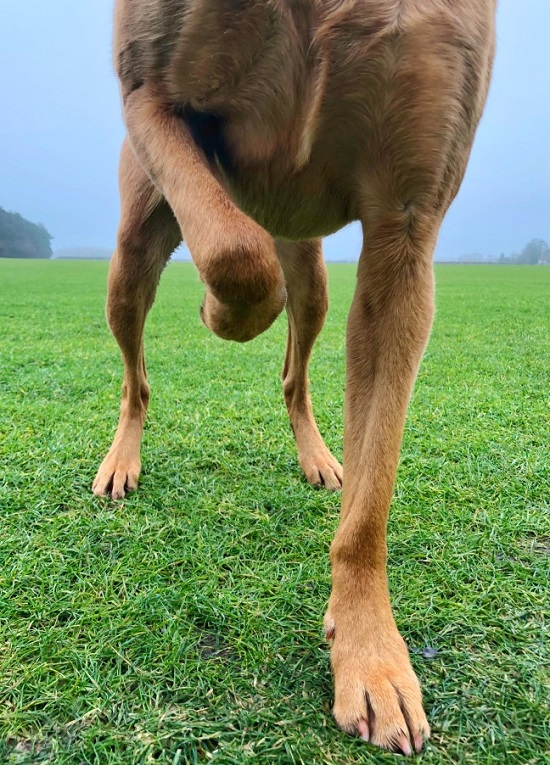
Before becoming a vet yourself, try these immediate care steps when your dog starts limping.
Stay Calm:
It can be upsetting to see your dog limping but try not to be over-reactive. Keep in mind that your dog knows your emotions, so it may be more advantageous if you stay calm.
Note: Don’t cry over a splinter! Your dog may be thinking you are joining them with their limp.
Restrict Movement:
If you notice your dog is limping, limit daily activity to prevent further aggravating an injury. Prevent them from running, jumping, or roughhousing. It is recommended to take them outside on a leash for potty breaks to limit their movement, and you may also choose to confine them to a comfortable and quiet area.
Note: Consider this as mandated Netflix time – for both of you – grab the treats!
Observe and Examine with Care:
Look at the affected limb for signs of injury – cuts, swelling, abnormal lumps, or something lodged between their toes – like a thorn, a splinter, or a rock. With gentle pressure, touch along the affected leg, starting at the toes and moving up and taking note of any tender areas or heat. If your dog acts uncomfortable at any point, stop examining it immediately.
Note: Avoid fake and theatrical, like we’re playing CSI: Canine Unit with a magnifying glass and serious theme music. Just a quick and gentle look is all we need.
Apply Ice Pack
If there is suspected swelling and there are no signs of a fracture (for example, the limb is not bent at an unusual angle), you can use an ice pack wrapped in a towel for small periods a few times daily. The ice pack can decrease inflammation and can be soothing.
Note: Do not forget, no ice packs on a broken leg, genius!
Monitor Closely
Get a close eye on whether the limping improves with rest or not. Watch for any worsening of the limp or the development of other concerning signs like significant swelling, pain (whining, yelping), fever, lethargy, or loss of appetite.
Note: Don’t google ‘dog limp’ at 2 AM just yet. Call your vet if things don’t get better or if you notice any of those worrying signs.
When to See a Vet 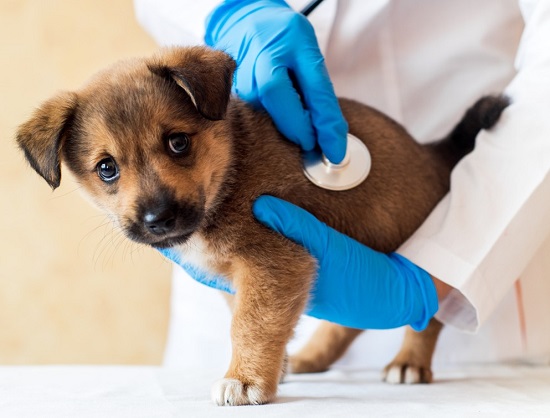
Some limps are minor and nothing to be worried about, while others are worth visiting the vet. Knowing which will save on unneeded suffering for your dog – and an unplanned vet bill. Here’s how to know when to seek professional help and when to wait it out.
Severe Pain:
If your dog is trembling, whining, yelping, or is showing behavior changes like hiding, unwillingness to move, fear, or reactivity, you should take him to the vet as early as possible. This includes when your dog is not putting any weight on the affected leg.
Obvious Physical Abnormalities:
If there is significant swelling around the area of injury, the limb feels hot to the touch, or any oozing or discharge from the injured area. Be on guard for an obvious fracture, deformity, or a dangling limb that may indicate a dislocation.
No Improvement:
If limping persists for more than a day’s rest or worsens, it’s best to get it checked out. Limping, when accompanied by other systemic signs such as fever, lethargy, or poor appetite, is dangerous for your pooch. A history of known trauma, such as being struck by a vehicle.
However, if your dog has recently begun to slightly limp but is still putting weight on it and acting normally, it’s usually acceptable to let it rest for a few hours daily to see if it gets better. Either way, observe the limp and look for other signs that might mean more. In the case of a mild situation, you can wait at home for now, but if you are concerned, I recommend seeking care for your dog’s health and safety.
Preventing Limping in Dogs 
Limping is hardly a cakewalk—so here are some hints to help avoid the “Limp Dance” with your pup.
First, make sure your floors are a safe zone. You want to watch for things like socks, stray Lego bricks, or anything else your dog might awkwardly step on or get stuck in their paws. Think of it as creating mini-Lego-free zones to save those precious paws from unnecessary pain. Checking regularly for possible hazards in your dog’s environment is always a good idea.
Next is moderate exercise—exercise in moderation is beneficial. Because watching Zoomies can be entertaining, avoid abrupt excitement (extreme activity) regarding your dog and overactivity for dogs that have not been conditioned.
Remember, Fido should not “train for a marathon” unless he is a very specialized athlete and has a qualified instructor (not you). Take regular outings when you can, and staying active could consist of low-level exercise—walks and controlled play don’t hurt.
Also, don’t neglect routine visits with your local veterinarian. Your veterinarian can spot potential concerns ahead of your dog developing the limp. Think of these pre-paintings as catching any potential issue before it develops into the “Limp Dance.” A veterinarian can also educate you on any breed-specific predispositions or precautions.
Conclusion
Alright, you’ve journeyed through the world of canine limps, from deciphering those subtle shifts in gait to knowing when it’s genuinely “code red, paws down!”
From drama queens faking a slight discomfort for extra cuddles to those moments when a real ouch demands attention, you’re now practically a limping dog whisperer. Remember, your dog might just be trying to work those puppy-dog eyes for extra treats, but if their limp persists or looks serious, trust your gut—and the guidance we’ve covered.
You’ve got the knowledge to provide initial care, know when to seek professional help from your vet, and even how to prevent some of those wobbles in the first place.
So go forth, observe those precious paws, and remember: your dog might want extra treats, but if not, you’ve got this!
Care to share any funny or concerning tales of your dog’s limping adventures below? We’d love to hear them!